

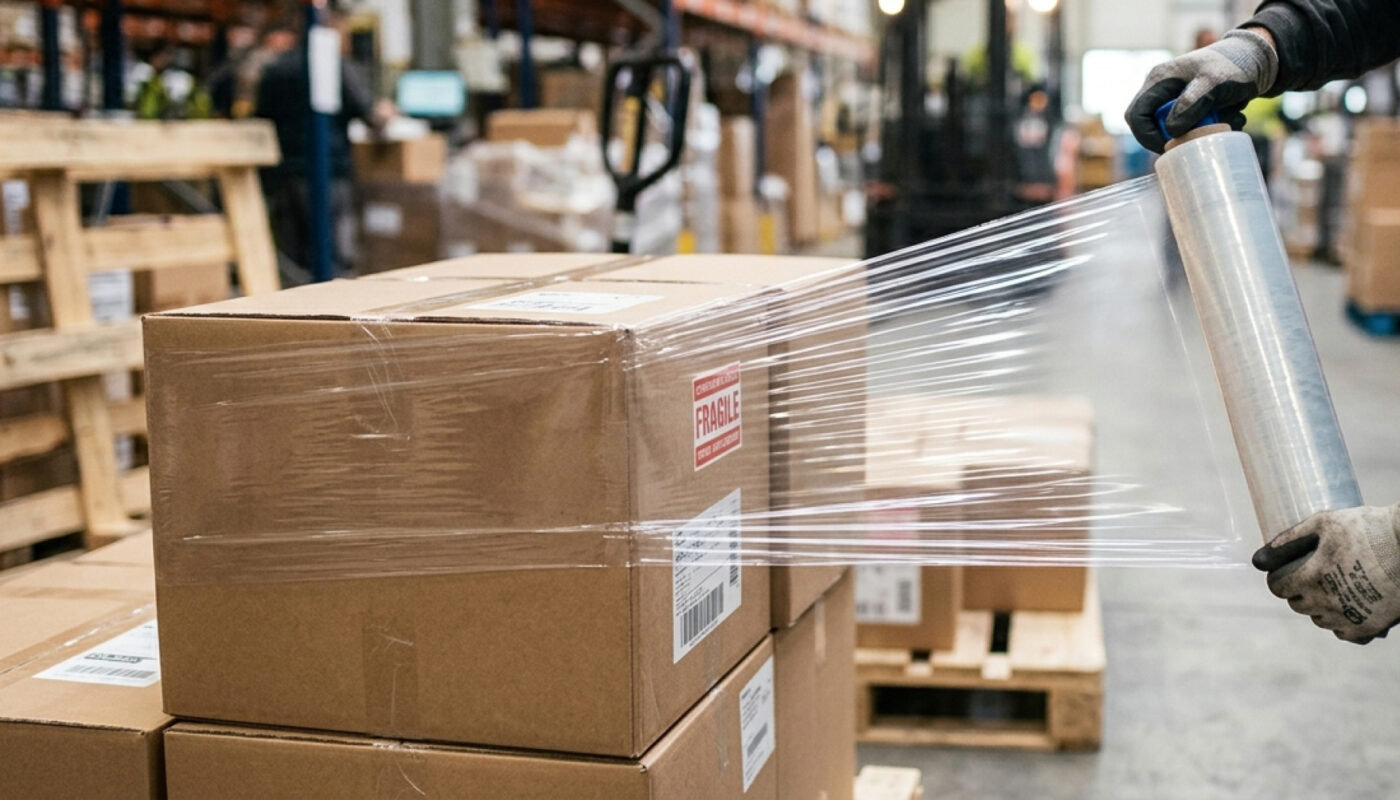
In logistics and supply chain operations, stretch film as tertiary packaging plays a crucial role in protecting goods during storage and transportation. Stretch film is commonly used to wrap pallets, keeping products stable, secure, and protected from dust and moisture.
Tertiary packaging refers to the outermost layer used for bulk handling and distribution. Unlike primary and secondary packaging, its main purpose is to ensure stability and safety of goods in large quantities. Stretch film is widely used due to its elasticity, strength, and ability to cling without additional adhesives.
Functions of Stretch Film
- Secures products on pallets to prevent shifting
- Protects goods from dust, dirt, and moisture
- Reduces the risk of damage during transportation
- Improves handling and warehouse efficiency
Types of Stretch Film
- Hand Stretch Film: applied manually
- Machine Stretch Film: used with wrapping machines
- Pre-Stretch Film: pre-stretched for better efficiency and cost savings
Benefits of Stretch Film
- Strong and highly elastic
- Transparent for easy product identification
- Easy to apply and cost-efficient
- Helps reduce packaging and damage costs
Using stretch film as tertiary packaging is an effective solution to improve product safety and logistics efficiency. Choosing high-quality stretch film ensures safer deliveries, reduced damage, and a more professional distribution process.
More information? 
