


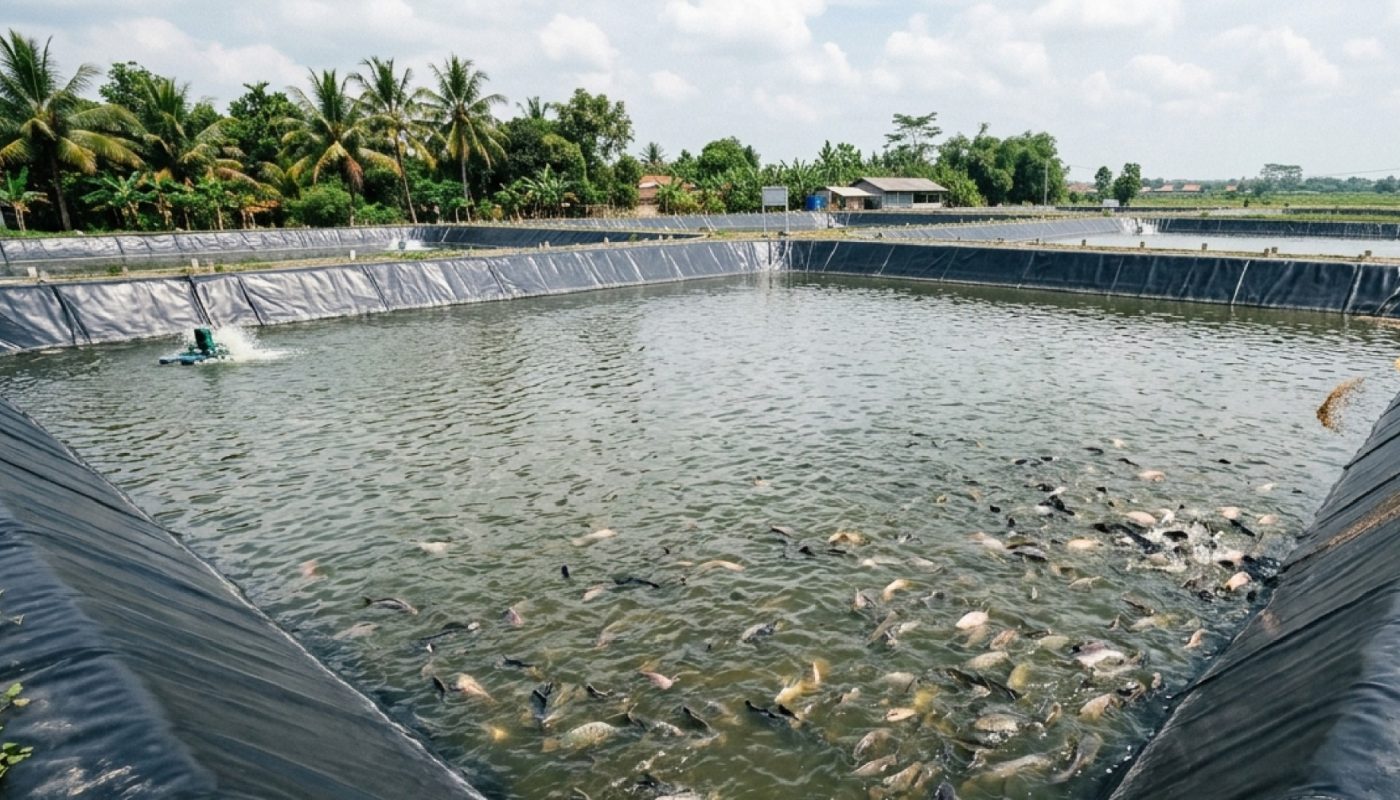
Geomembrane film is a waterproof plastic sheet widely used to prevent liquid leakage in various projects. This material is made of LDPE, which offers high resistance to water, chemicals, and UV exposure. Thanks to its advantages, the use of geomembrane film is expanding across various sectors, from agriculture to industry.
- Fish Farming Ponds
Geomembrane film is widely used as a liner for ponds raising catfish, tilapia, patin, gurame, and even shrimp farms. This material helps maintain water quality, reduce leaks, and facilitate the pond cleaning process.
- Reservoirs and Water Storage
In the agricultural sector, geomembrane film serves as a water-retaining layer in reservoirs, small dams, and irrigation ponds. Its use helps store water reserves for longer periods, especially during the dry season.
- Wastewater Ponds
Industries use geomembrane film as a lining for wastewater ponds to prevent liquids from seeping into the ground. This helps reduce the risk of environmental pollution and meets waste management standards.
- Mining
In the mining sector, geomembrane film is used in tailings ponds, process water reservoirs, and heap leach areas. This material is capable of containing liquids that contain chemicals, making it safer for the environment.
Some of the advantages of geomembrane film include leak resistance, resistance to UV rays and chemicals, ease of installation, and a long service life. With these various advantages, geomembranes provide an efficient solution for a wide range of water and other liquid containment needs.
More information? 
